



We Built a Working App in 30 Minutes, Live, Twice, at Boston Tech Week
At #BosTechWeek we sat down in a room full of curious people with a blank page and a 30-minute timer, let the room vote on what to build, and shipped a real, deployed web app before the clock ran out. Here's exactly how, and why it's how we prototype client work now.
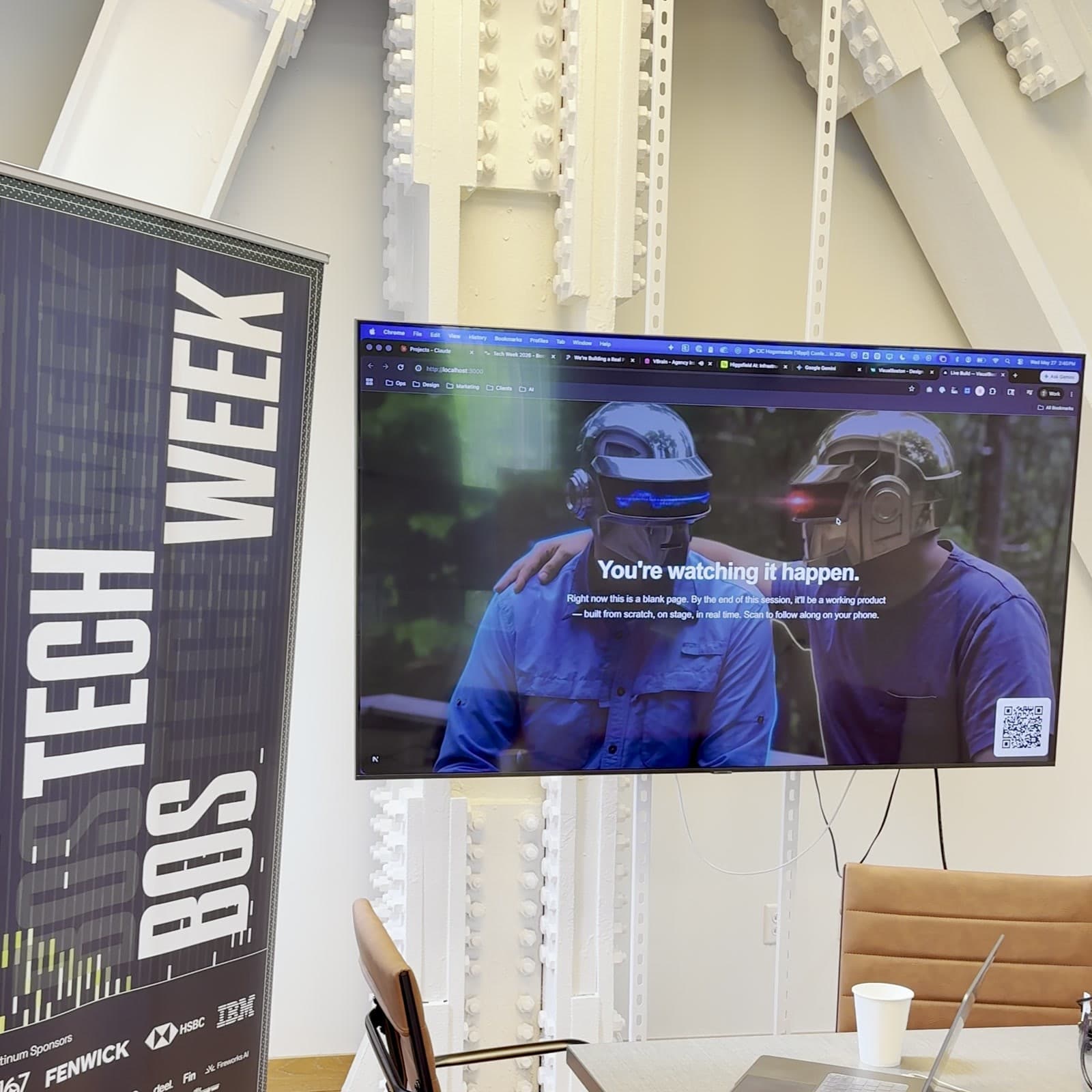
What made this nerve-wracking is that we had no slides, no canned demo, and no safety net. It was just the two of us in front of a room full of founders, builders, operators, and a few friendly skeptics, working on a product that didn't exist yet. The audience picked the idea, and then we designed it, coded it, generated the imagery, and deployed it for real while everyone watched. We didn't have any finished work to point at, so we showed the work itself.
We enjoyed it so much that we did it twice.
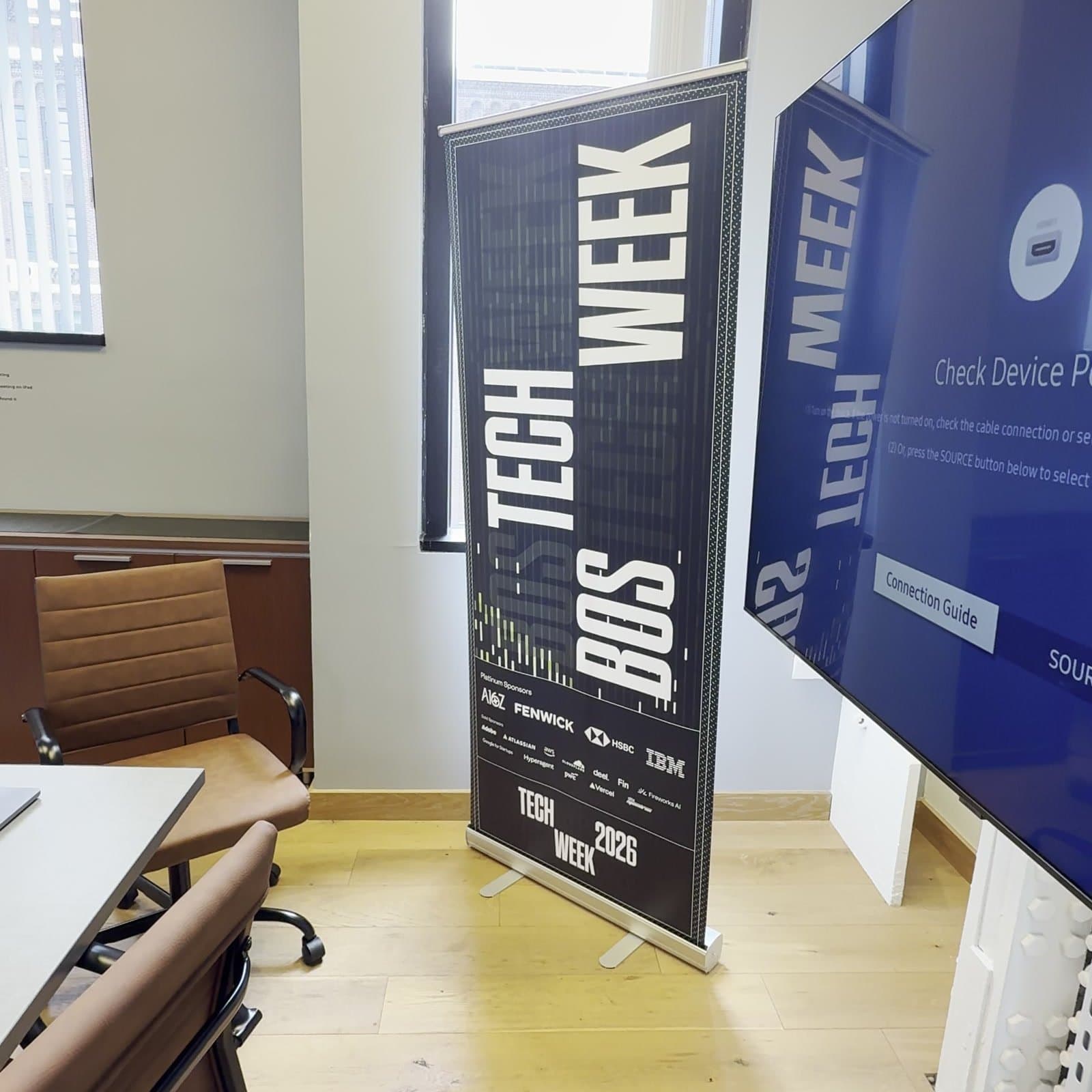
Two events, two brand-new apps
We ran the same live-build session at two Boston Tech Week events:
- Wednesday, May 27 in the Hogsmeade Room at CIC Cambridge (245 Main St)
- Thursday, May 28 at Venture Café Cambridge, a cozier room that was part of a much larger Tech Week event (thank you to everyone who packed in)
The format was simple, and a little chaotic on purpose. Alec led the design, Mark led the engineering, and the audience voted on which of three AI-generated ideas we would actually build. Once they chose, we started a 30-minute timer and got to work.
"Right now this is a blank page. By the end of this session it'll be a working product, built from scratch, in real time."
Here's what we ended up building:
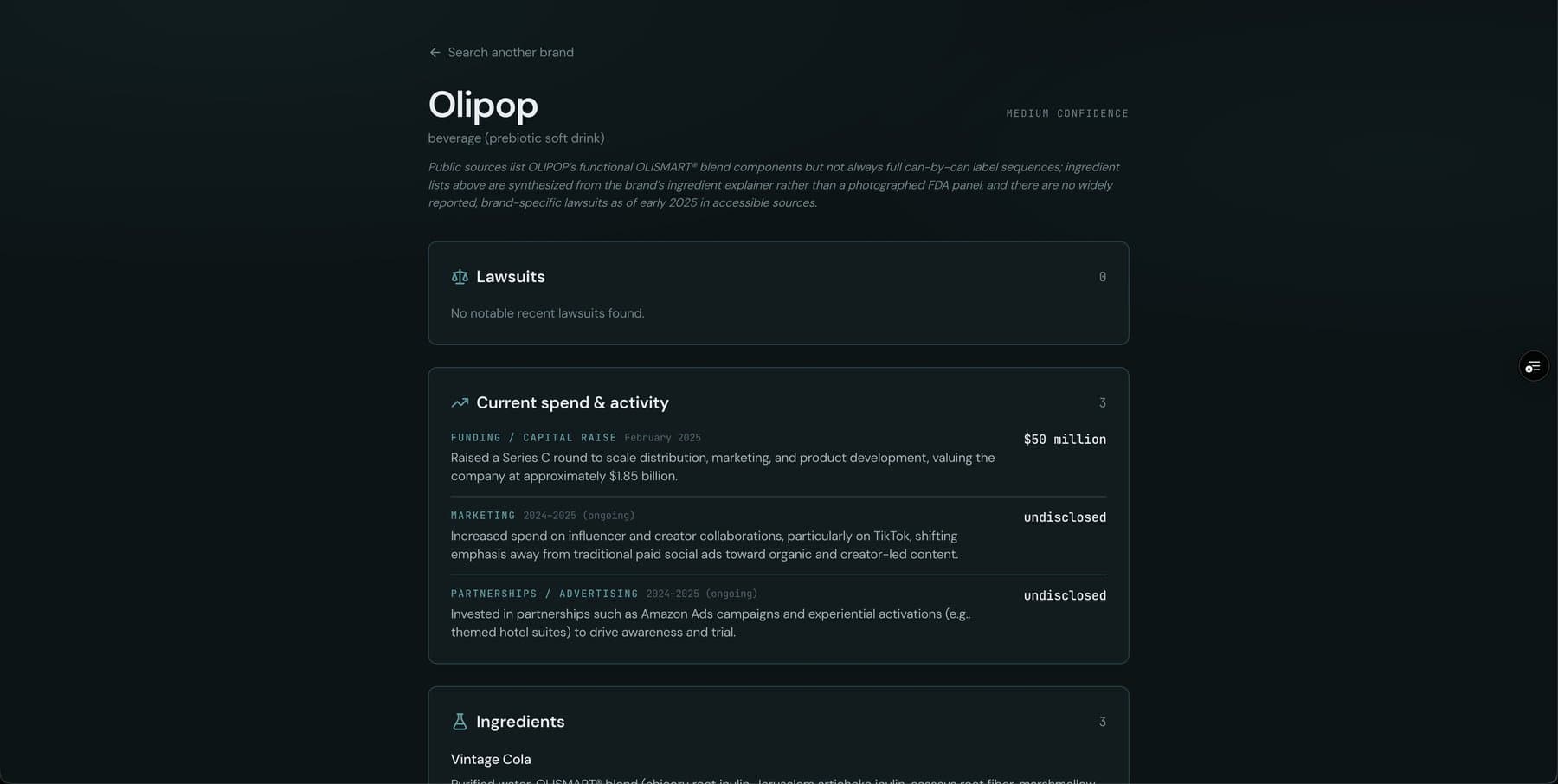
On Wednesday, the room chose Brand Intel Lookup. You type in any consumer brand and get three instant cards: whether it's currently being sued, where it's been putting its money lately (marketing, hiring, expansion), and, if it goes on or in your body, what's actually in it. It takes a 20-minute research slog across PACER, news, and ingredient labels and collapses it into a single search box. Try it live →
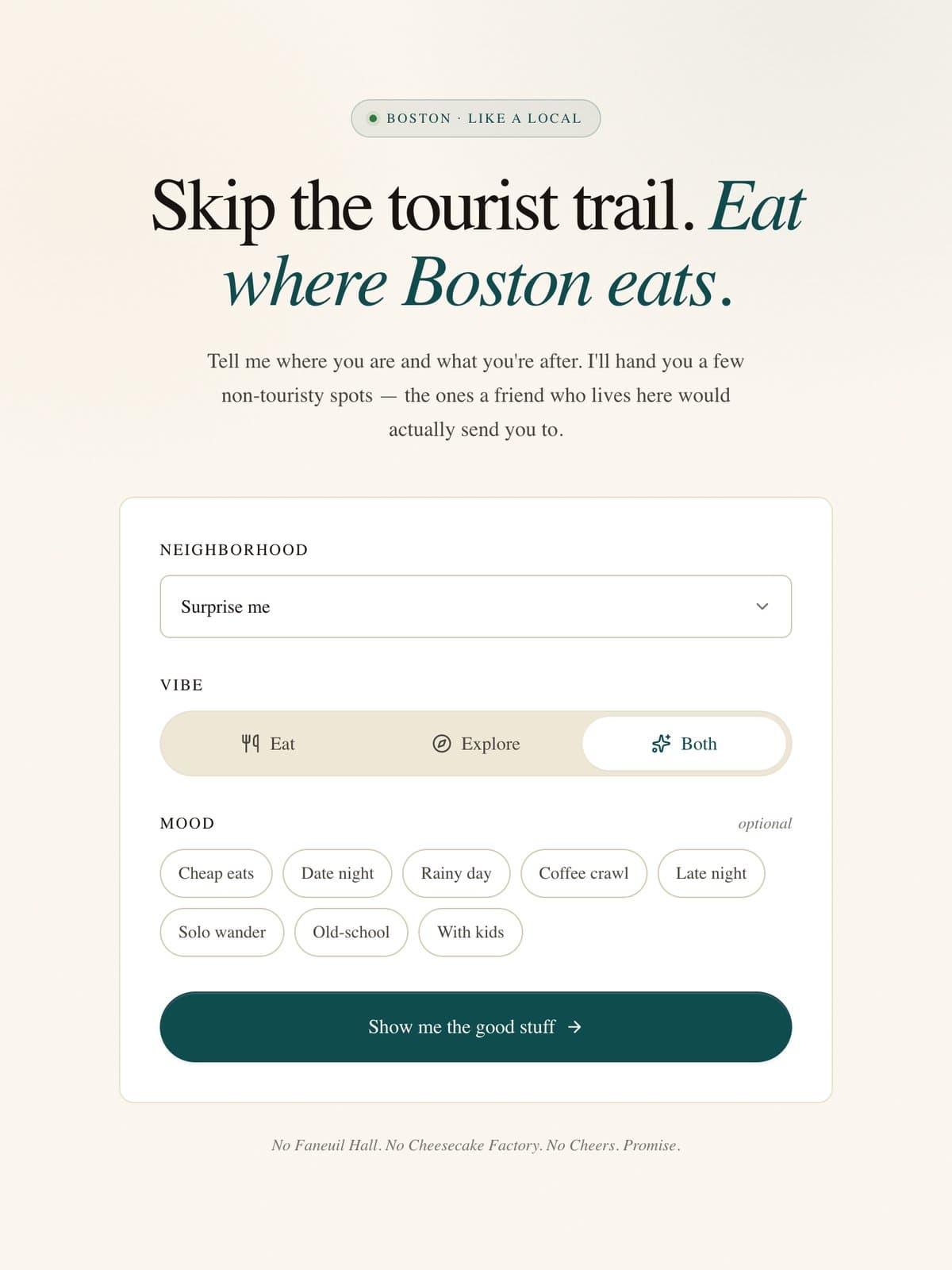
On Thursday, the room went with Boston Like a Local. You pick a neighborhood and a vibe and get five or six genuinely non-touristy recommendations: the spots locals actually love, each one paired with the tourist trap it replaces. (Sorry, Faneuil Hall.) Try it live →
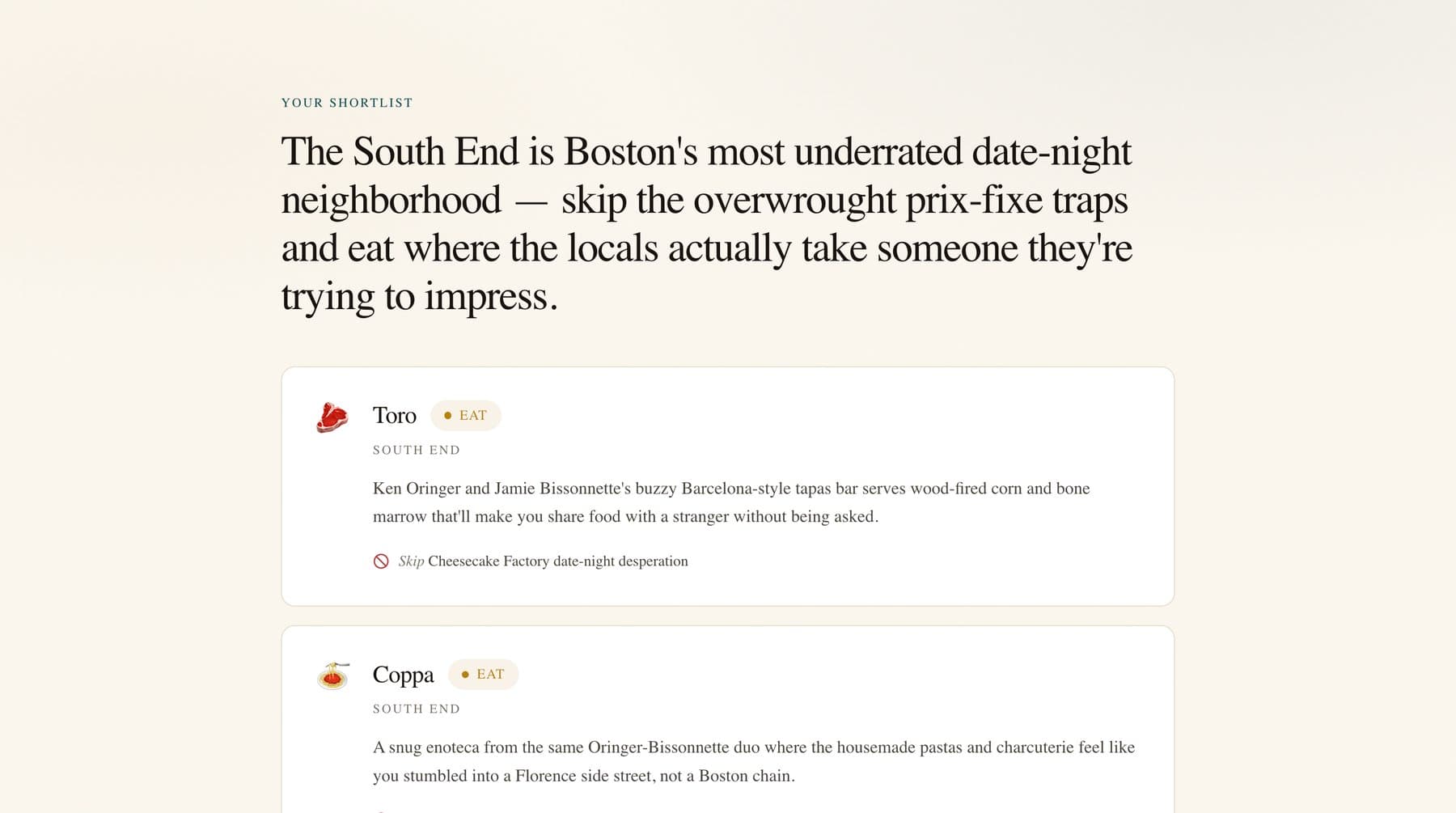
Both of them went from an idea to a live, deployed web app before the timer hit zero.
How we actually build a real app in 30 minutes
A lot of people assume that "live coding" means typing fast, but it's really the opposite. The speed comes from having a good process, not from quick keystrokes. Here's the loop we ran in the room:
- Idea to PRD. We fed the winning idea into a Claude project pre-loaded with our PRD instructions. In about three minutes we had the problem, the users, the scope, and the data shape written down.
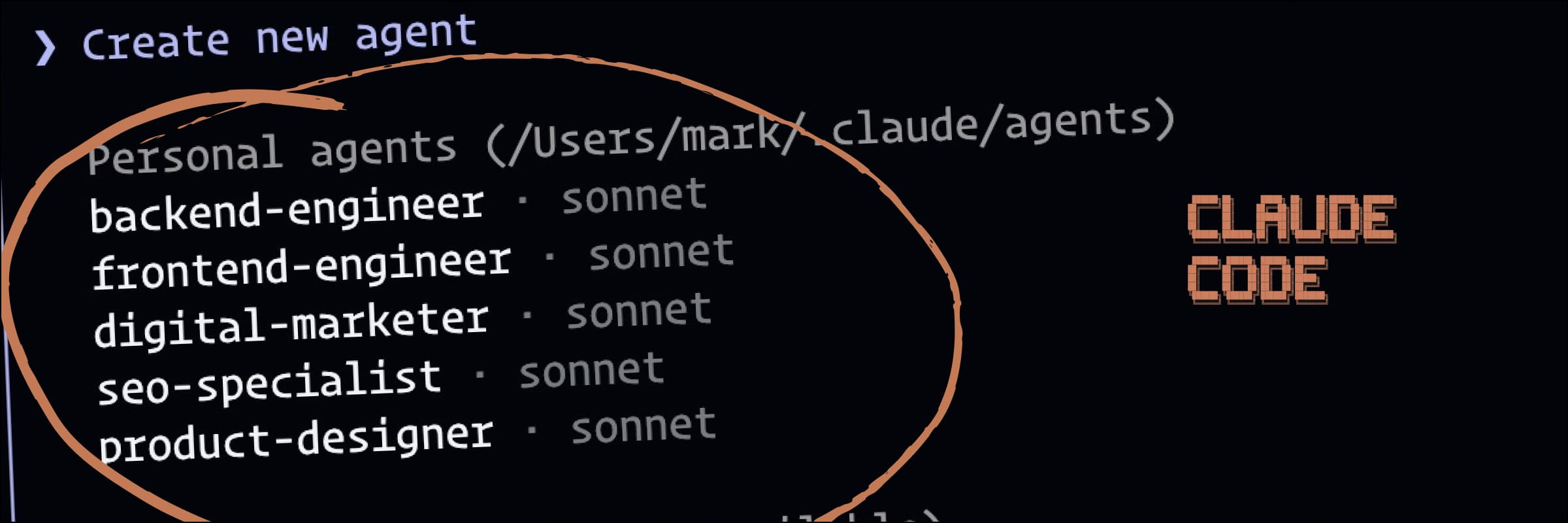
- PRD to code. That spec went straight into Claude Code, which scaffolded the app while we narrated what was happening.
- Design in parallel. While the app took shape, Alec worked on the look and feel (buttons, type, layout) and then handed it off with a commit.
- AI imagery, compared live. We ran the same image prompt through Gemini, ChatGPT, and Higgsfield side by side and picked the winners on the spot.
- Polish and deploy. A few mobile-first tweaks, and then a live deploy to Vercel.
- Show our work. We left the Claude transcript, the GitHub commits, and the Vercel deploys up on screen so nobody had to take our word for it.
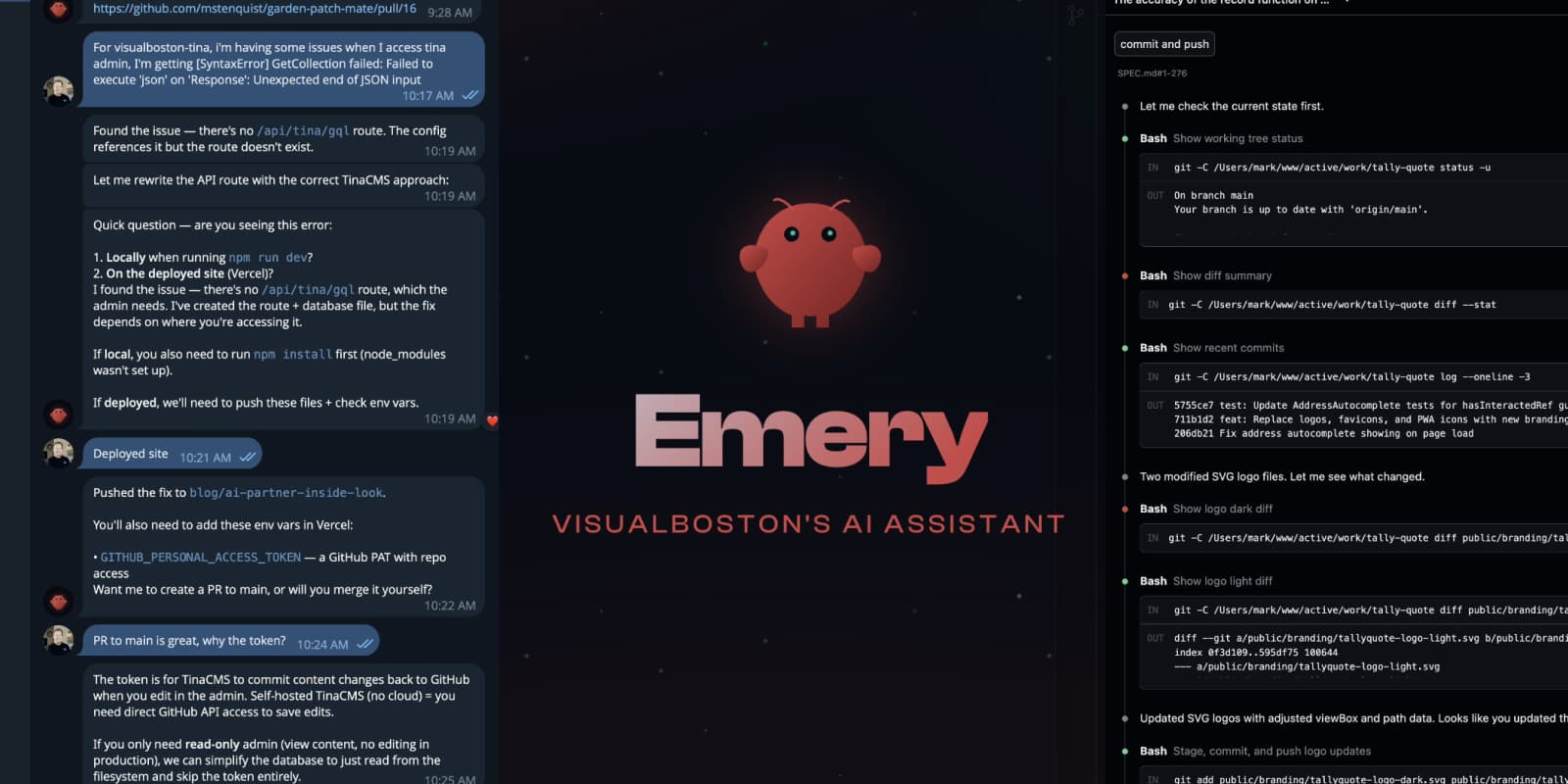
Interestingly, the crowd favorite had nothing to do with the code. Every time we stopped typing and just talked to Claude Code out loud, dictating a full prompt with Wispr Flow and watching a clean, punctuated paragraph of instructions appear on screen in about a second, the room was amazed. Nobody expected the dictation to keep up that well, and it ended up being the highlight of both demos.
Why this matters for our client work
This isn't a party trick. It's how we now prototype and validate real client work. We can put a believable, clickable, deployed version of an idea in front of stakeholders in hours instead of weeks, and the 30-minute timer just made that easy to see.
"I was amazed to see a working POC of an idea from the audience come together live."
A senior engineering manager who was in the room
A few people asked us afterward whether we had a write-up they could pass along to their teams. This is it.
If there's one thing we'd want you to take away, it's that the process matters more than the speed. A tight PRD, a model that can scaffold from it, a designer and engineer working in parallel, and a willingness to ship something imperfect and then iterate — that's most of it. The rest is mostly narrating what's happening as you go.
Matt McGuire on which features actually made money
Right after our Thursday session at Venture Café, Matt McGuire, the contract Product Manager we bring in on product work, ran his own workshop. It turned out to be a perfect companion to a "build it fast" talk, because once you've shipped something, how do you actually know it was worth shipping?
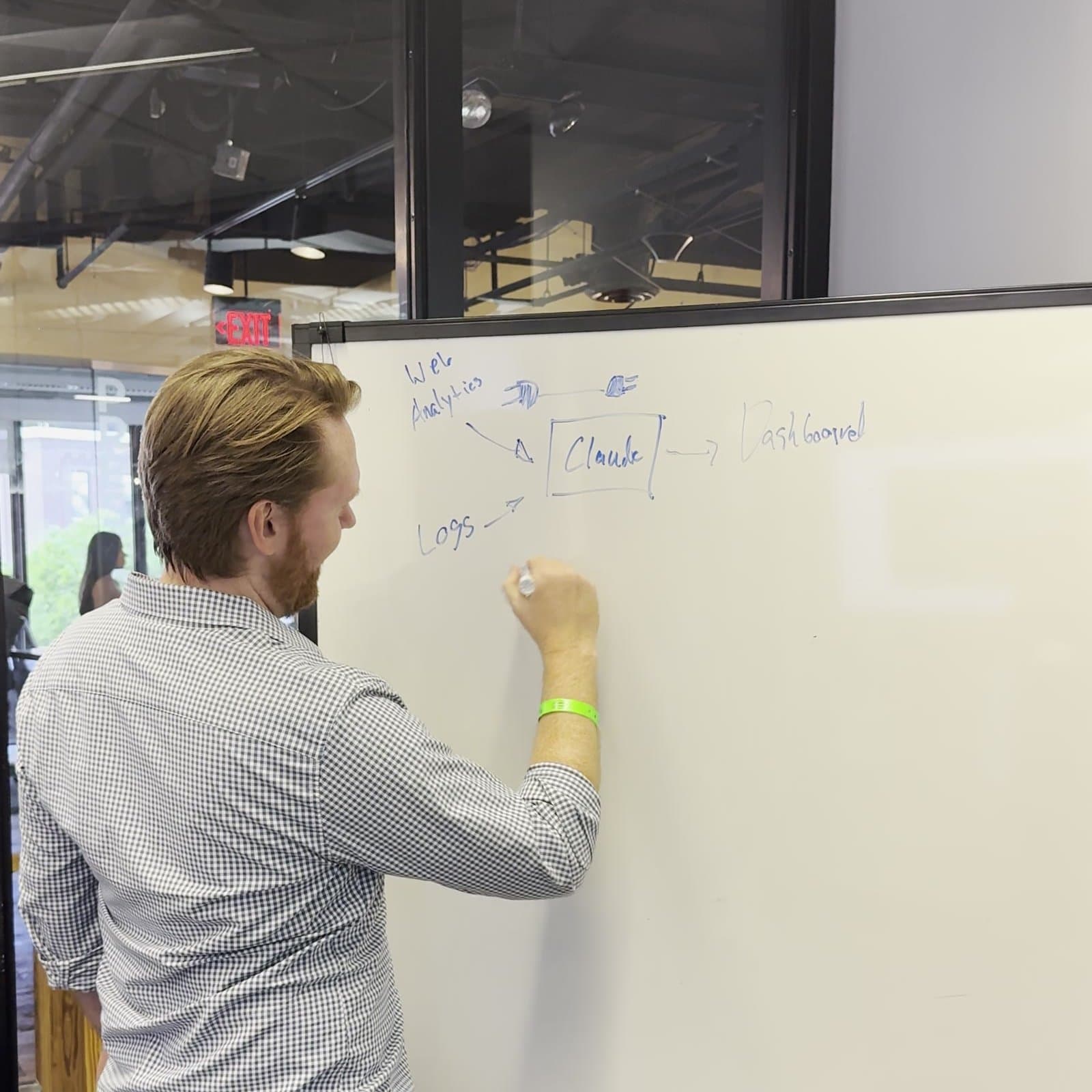
His session, "You Shipped All Quarter. Which Features Made Money?", walked the room through his product, Vektis, and the question it's built to answer for B2B SaaS teams: connect your GitHub and CRM, and you can finally see which features actually drive revenue and which ones quietly correlate with churn.
Building quickly is only half of it. Knowing which of those builds earned their keep is the other half, and it's a big part of why we enjoy working with people like Matt.
A bit about the swag
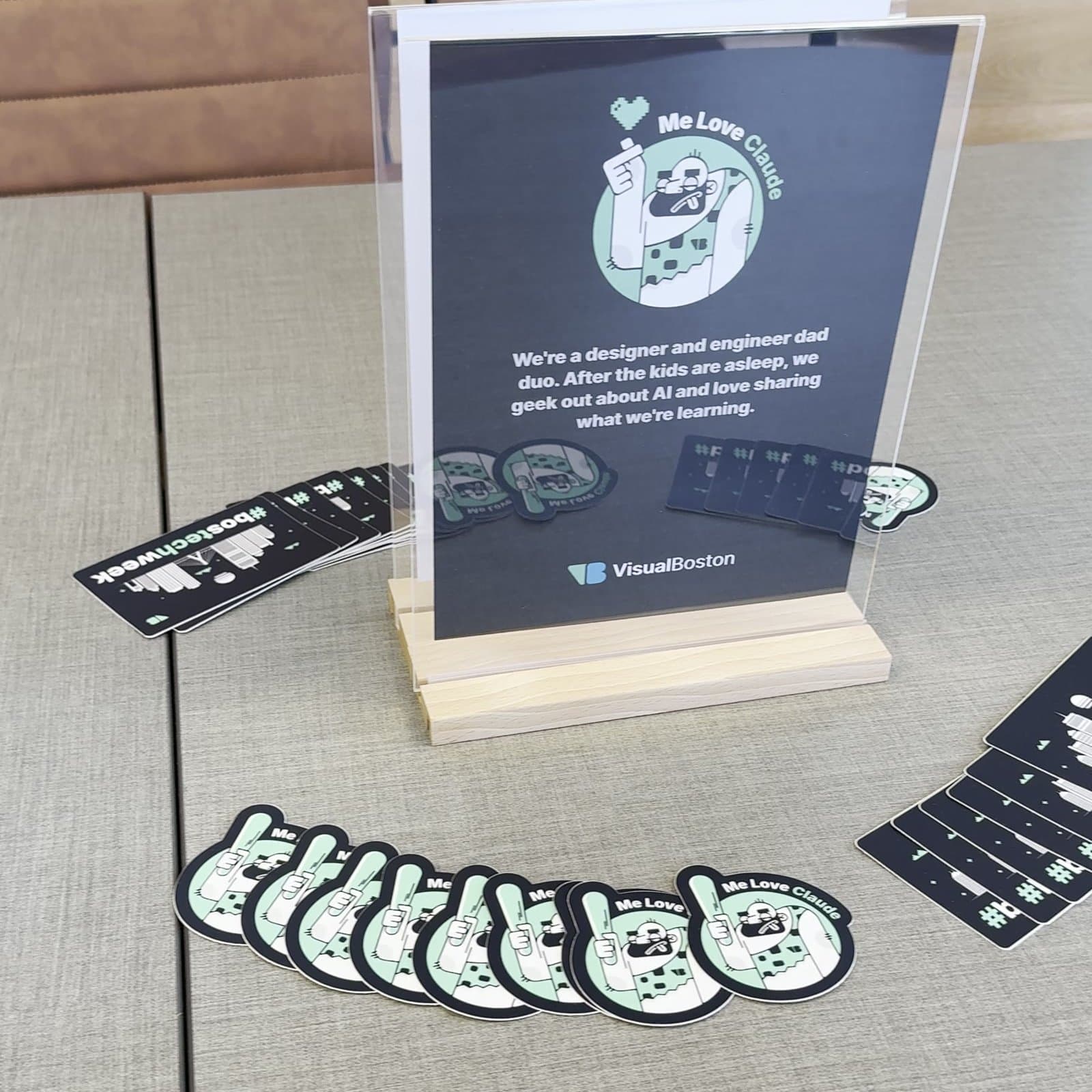
We may have gotten a little carried away. We brought stickers and a sign that sums us up pretty well: "We're a designer and engineer dad duo. After the kids are asleep, we geek out about AI and love sharing what we're learning."
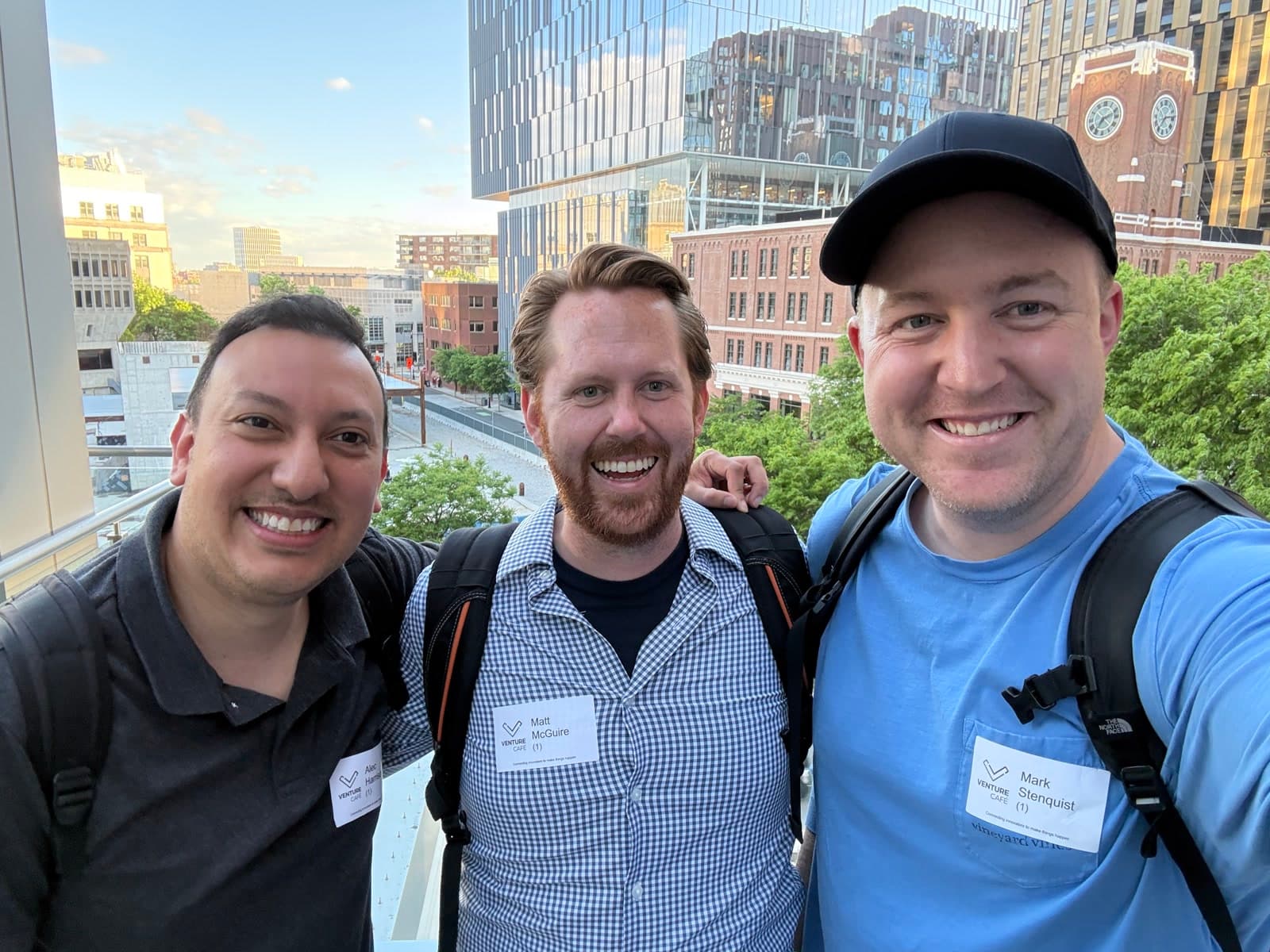
Thank you to everyone who packed into those two rooms, voted for the riskier ideas, and cheered when the deploys went green. We had a genuinely great time, we're grateful to the Boston Tech Week organizers for the space, and we're already looking forward to doing it again.